Introduction
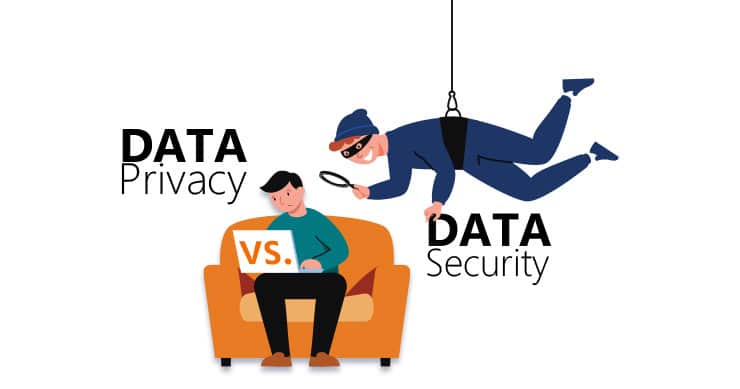
Privacy and security are two terms that are often used together, especially when discussing technology, websites, mobile applications, and personal information. Although they are closely connected, privacy and security are not the same thing.
Security focuses on protecting information and systems from unauthorized access, damage, theft, or disruption. Privacy focuses on how personal information is collected, used, shared, and controlled.
Understanding the difference is important for individuals and businesses alike. Strong security can help protect private information, but security alone does not guarantee good privacy practices.
What Is Privacy?
Privacy is fundamentally about control over personal information.
It concerns questions such as:
- What information is being collected?
- Why is it being collected?
- How is it being used?
- Who can access it?
- Is it being shared with third parties?
- How long is it being retained?
- Can individuals access, correct, or delete their information?
For example, when you create an account on a website, the company may collect your name, email address, location, preferences, or usage information. Privacy concerns how that information is handled.
A company could have excellent technical security while still collecting more personal information than necessary or using it in ways customers did not expect.
What Is Security?
Security is about protecting systems and information from threats.
Security measures can include:
- Password protection
- Multi-factor authentication
- Encryption
- Firewalls
- Access controls
- Security monitoring
- Vulnerability testing
- Backup systems
- Malware protection
Suppose an online retailer stores customers’ payment information. Security controls help prevent unauthorized people from accessing or stealing that information.
Security is therefore concerned with preventing unauthorized access and protecting the confidentiality, integrity, and availability of data and systems.
Privacy and Security Work Together
Although privacy and security are different, they are strongly connected.
Imagine that a company collects customers’ addresses and stores them in a database. Privacy determines why the company needs those addresses and who should be allowed to use them. Security determines how the database is protected against unauthorized access.
If the database is hacked, private information could be exposed.
On the other hand, even if the database is perfectly secure, the company could still have poor privacy practices if it collects unnecessary information or shares it without appropriate justification or transparency.
A Simple Example
Consider a smartphone application that asks for access to your location.
Privacy question: Why does the application need your location, and what does it do with that information?
Security question: How does the application protect the location data it collects?
These are two different questions.
A privacy-friendly application might request location access only when it is necessary and explain how the information is used. Security controls would then help protect that location information from unauthorized access.
Why Encryption Matters
Encryption is a classic example of a security technology that can support privacy.
When information is encrypted, it is transformed into a form that unauthorized parties cannot easily understand without the appropriate key.
Encryption can protect information while it is being transmitted or stored.
However, encryption does not determine whether a company should have collected the information in the first place.
A business could encrypt every piece of customer data it stores while collecting far more information than necessary. That would represent strong security but potentially questionable privacy practices.
Data Minimization Connects the Two
One of the most useful principles for protecting both privacy and security is data minimization.
Data minimization means collecting and retaining only the information that is genuinely necessary for a specific purpose.
Collecting less information can improve privacy because there is less personal data being used.
It can also improve security because attackers have fewer valuable records to steal if a system is compromised.
For businesses, reducing unnecessary data can therefore provide benefits on both sides.
Privacy Policies Are Not Security Controls
Privacy policies explain how an organization handles personal information. They may describe what information is collected, why it is collected, how it is shared, and how long it is retained.
A privacy policy is not, however, a substitute for technical security.
A company can have a detailed privacy policy and still suffer a data breach if its systems are poorly protected.
Similarly, having sophisticated security infrastructure does not automatically mean that the organization’s privacy practices are appropriate.
Both areas require separate attention.
Security Does Not Always Mean Privacy
Security tools can sometimes create privacy concerns themselves.
For example, an organization may use extensive monitoring systems to detect suspicious behavior. Those systems could collect large amounts of information about employees or customers.
From a security perspective, additional monitoring may be useful. From a privacy perspective, the organization should consider whether the information is necessary, proportionate, properly protected, and handled transparently.
This illustrates why privacy and security sometimes involve different priorities.
Privacy by Design and Security by Design
Modern organizations increasingly consider privacy and security during the design stage rather than adding them after a product has been built.
Privacy by design means considering privacy implications when developing products, services, and processes.
Security by design means incorporating security protections into systems from the beginning.
For example, a new application might be designed to collect minimal personal information, encrypt sensitive data, restrict employee access, and automatically delete information when it is no longer needed.
This approach is generally stronger than trying to repair privacy and security weaknesses after launch.
Why Businesses Need Both
For businesses, privacy and security are not simply technical concerns.
A privacy failure can damage customer trust and potentially create regulatory consequences. A security breach can expose sensitive information, interrupt operations, create financial losses, and damage an organization’s reputation.
Customers increasingly expect companies to handle their information responsibly.
Businesses should therefore establish clear privacy practices while also investing in appropriate cybersecurity controls.
What Individuals Can Do
Individuals can also take practical steps to protect both privacy and security.
Use strong and unique passwords, enable multi-factor authentication where available, keep software updated, review application permissions, and be cautious about sharing unnecessary personal information.
It is also useful to read privacy settings and understand what information an application or service requests.
Remember that convenience often involves trade-offs. Before providing personal information, consider whether the service genuinely needs it.
Conclusion
Privacy and security are closely related, but they answer different questions.
Privacy asks: “How should personal information be collected, used, shared, and controlled?”
Security asks: “How do we protect information and systems from unauthorized access, misuse, damage, or disruption?”
Good security is essential for protecting privacy, but it does not guarantee privacy. Likewise, responsible privacy practices cannot fully protect information without effective security controls.
The strongest approach is to treat both as complementary priorities. Collect only the information that is necessary, explain how it will be used, restrict access appropriately, protect data with strong technical controls, and regularly review how information is handled.
In an increasingly connected digital world, understanding the difference between privacy and security is one of the first steps toward making smarter decisions about personal data.